
Fayetteville Resident Lookup Record Trail
A one-person record search is a chain of limited records, not one master list. Begin by deciding what needs confirmation: a current registration lead, a listed parcel owner, a recorded transaction, a public court event, a historical relationship, or an official business affiliation. Each source has a different keeper and a different time frame. The table separates the question from the record so that a tax listing is not mistaken for proof of every occupant, and a docket is not mistaken for an official certified file.
| Record | What it can confirm | Fayetteville route | Access |
|---|---|---|---|
| Tax parcel or GIS map | Listed owner, parcel, map context, and possible address trail | Cumberland Tax Administration and GIS | Free web route; office help for detail |
| Voter record | Registration status, public address, party, districts, polling place, and history | NC State Board of Elections | Free one-record lookup; protected fields withheld |
| Recorded instrument | Recorded parties, legal description, book or page, and recording date | Cumberland Register of Deeds | Name-keyed index and copy route |
| Court docket | Public case context, dates, events, and disposition | NC eCourts and Cumberland Clerk | Portal is free; official copy is from Clerk |
| Vital record | Birth, death, marriage, or divorce event under statutory limits | CCROD, NC Vital Records, or Clerk | Eligibility, identification, and fees apply |
| Probate or historical collection | Heirs, administrators, estates, and dated family context | Clerk, State Archives, and FamilySearch | Access varies by file and collection |
| Business or license filing | Entity or credential affiliation and official filing details | NC Secretary of State and NCBOLD | Public search with source-specific limits |
Keep a simple log of the exact spelling used, source date, result URL, and what the result actually says. Middle initials, former names, a spouse or parent, a street, a ZIP, and a document date are stronger together than a name by itself.
Fayetteville Voter Record Search
The NC voter lookup is a practical current-registration lead. It asks for First Name and Last Name, with optional Middle Initial, Year of Birth, and County. At least one status choice, Registered or Removed or Denied, is used before searching. Choosing Cumberland narrows a statewide name search. The result can show voter details, jurisdictions, polling place, sample-ballot availability, absentee information, and voter history when available.
For this voter search, note the public name, county, registration number, status, address, city, party, polling place, voting districts, and history. Voter history records election participation, not ballot selections. Do not put full birth date, Social Security number, identification data, email, or a protected address into a request. The county elections office can address a wrong or missing record, and the State Board offers current and historical data files under its separate request rules.
Note: A voter match is a registration lead, not a complete roster for an address, because someone may be unregistered, removed, registered elsewhere, or protected.
Confirm Fayetteville Records With Parcels
When a name is tied to an address, confirm the place before combining records. Cumberland’s prior-year tax search documents Bill Number, Parcel Number, Owner Name, and Street Name inputs, then a Go to Abstract result action. The county GIS adds parcel shape, address points, streets, ZIP, city boundary, and zoning context. A listed tax owner can differ from a mailing recipient or an occupant, and Cumberland expressly says tax ownership is not a legal opinion of title.
Carry the parcel identifier, listed owner, and legal description to the CCROD Records Search. Cumberland deeds are indexed by grantor and grantee name, not by street address. The image or scanned index can provide recording date, book and page or document number, parties, legal description, and references to earlier instruments. Compare the legal description and source date, rather than relying on an address string alone. The Register of Deeds counter is the fallback when the web result is incomplete.
The one-person workflow changes when the question becomes a historical household question. The printed runs and their street sections are described on the Fayetteville city directory page, while the tax and deed chain remains the better route for a modern parcel question.
Fayetteville Resident Lookup Court Docket
The NC eCourts Portal offers public case information across North Carolina. Official guidance lists Party Name, Business Name, Record or Case Number, Citation Number, Attorney Name, Attorney Bar Number, Case Cross-Reference Number, Nickname, County, and Advanced Filtering with date-of-birth validation for resolving multiple public matches. Court-date searches can use party, case, business, attorney, bar number, judicial officer, or courtroom. Search the narrowest field available and read the county, case type, filing date, and disposition before concluding that a result belongs to a Fayetteville resident.
The Portal is a public docket layer, not the official court record. Public results can include party role, case number, county, court division, filing and hearing dates, docket events, judgment or disposition events, and available document images. Juvenile, sealed, expunged, restricted, and confidential material may not appear. A docket event does not establish a final outcome without its disposition and context.
The eCourts Portal is the source shown below.
Use the result as a lead for a public case, then ask the court custodian for the file or a certified copy when the exact official record is needed.
Fayetteville eCourts Record Access
eCourts access has changed recently in Cumberland. The Judicial Branch reported public kiosks with scanners, printers, and payment services in June 2025, and all 100 North Carolina counties completed Odyssey electronic case-management implementation on October 13, 2025. These changes improve public access to docket information, but they do not change the rule that the Cumberland Clerk keeps the official court file.
Portal versus official file. A Portal entry may appear within minutes of upload, subject to daily volume, while a certified or official copy must be requested from the Cumberland Clerk of Superior Court.
The Clerk is at 117 Dick Street, Cumberland County, with the main phone at 910-475-3000. A written copy request works best with the case number, parties, filing date, document name, and whether a certified or uncertified copy is needed. The statewide public-record route does not override sealing, expunction, juvenile, or other statutory restrictions.
Verify a Fayetteville Resident Lookup Match
Resolve same-name collisions with independent details. A person can share a first and last name with another person in the county, and an old address can attach to a former owner, business, or family member. Tie the record trail to a street, ZIP, middle name or initial, age or year, spouse or parent, business context, parcel history, and document date. Never merge two results solely because the names match.
- Start with the narrowest known identifier, such as a full name plus a middle initial, street, approximate age, relative, or prior address.
- Use voter status or the Tax and GIS route as a lead, recording the source date and whether the address is a public residence, mailing address, or parcel location.
- Search CCROD by grantor or grantee variants and read the recorded image for legal description, date, and referenced instruments.
- Check eCourts with party, case, citation, attorney, cross-reference, business, or nickname keys, then read the public docket’s disposition.
- Use an eligible vital, probate, historical-directory, or business record only to test a specific dated relationship or event.
- Docket
- A court’s dated list of public case events. It is not automatically the certified case file.
- Index versus image
- An index helps locate a record; the document image supplies the text, legal description, or other detail that the index may omit.
- Certified copy
- A copy issued or authenticated by the legal custodian for a purpose that requires an official document.
Stop when the independent facts do not align. A same-name result with a different street, family context, or date is a separate lead, not a confirmed match.
Fayetteville Vital Record Checks
Vital records can distinguish people with common names, but they are not general current-address records. NC Vital Records lists statewide system coverage beginning in 1913 for births, 1930 for deaths, 1962 for marriages, and 1958 for divorces. Cumberland’s Register of Deeds provides local birth, death, and marriage copies and indexes. Under N.C.G.S. §§130A-93 and 130A-99, certified birth copies are limited to eligible relatives, legal-rights requesters, and authorized representatives, with additional restrictions for adoption and confidential material.
The county form requires identification and relationship information. Cumberland lists $10 for a certified local copy and $0.25 for an uncertified copy; birth and death processing is stated as two to three working days, while a marriage certified copy follows the returned license within three business days. The state’s Vital Records order route has its own eligibility, delivery, and fee choices. A denied request or absent search result does not prove that an event did not occur.
For an heir or estate question, start with the decedent’s name and date, then use the Clerk for a current estate docket or the FamilySearch NC Estate Files and State Archives routes for historical material. Probate files may identify heirs, administrators, assets, residence clues, and property references, subject to file restrictions.
Fayetteville Record Filing Checks
Official filings can provide an affiliation, not a home address. The NC Secretary of State Business Registration Search accepts organization-name and official-person fields, with live option lists that can change. Results can connect an entity to a registered agent, principal office, officials, status, filings, and dates. Compare the legal entity name, assumed name, filing date, official title, and business address before treating a result as connected to the person being researched.
Cumberland assumed business names may appear at the Register of Deeds as well as in the state system. A UCC filing is a financing notice, not an ownership certificate. For regulated credentials, use NCBOLD to find the responsible board and then confirm current status with that board. These tools are useful for a named public affiliation, but they do not establish a Fayetteville residence.
Fayetteville Custody Records Scope
Custody and registry tools answer narrow status questions and should not be used as a general identity shortcut. The Cumberland active inmate lookup concerns the local detention roster, whose information may lag. It does not provide a complete history, and it does not identify every person with a similar name.
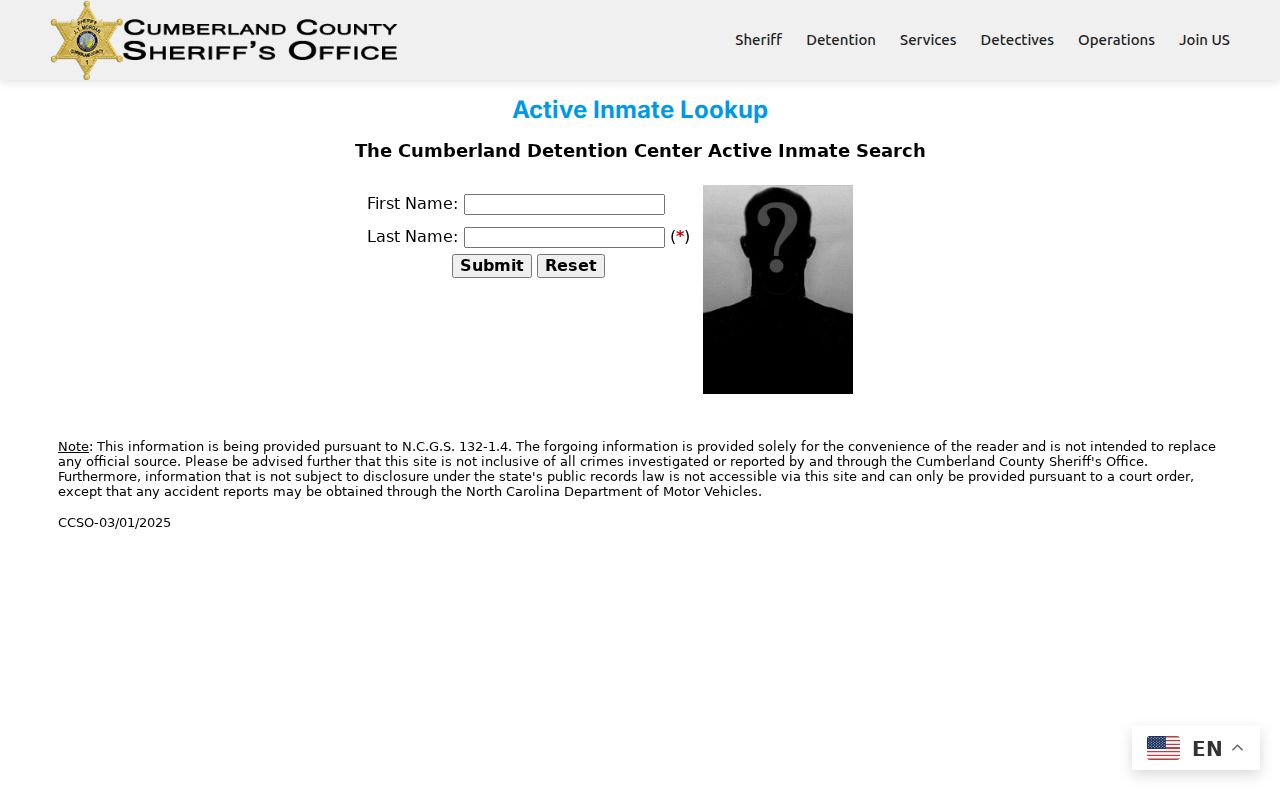
A local roster result needs the booking context and official custodian before it can be understood. It is not proof of a conviction or a current Fayetteville address.
The NC Department of Adult Correction offender search covers state prison offenders, probationers, and parolees, not the county jail. Its scope excludes local detention and should be read with that limitation.
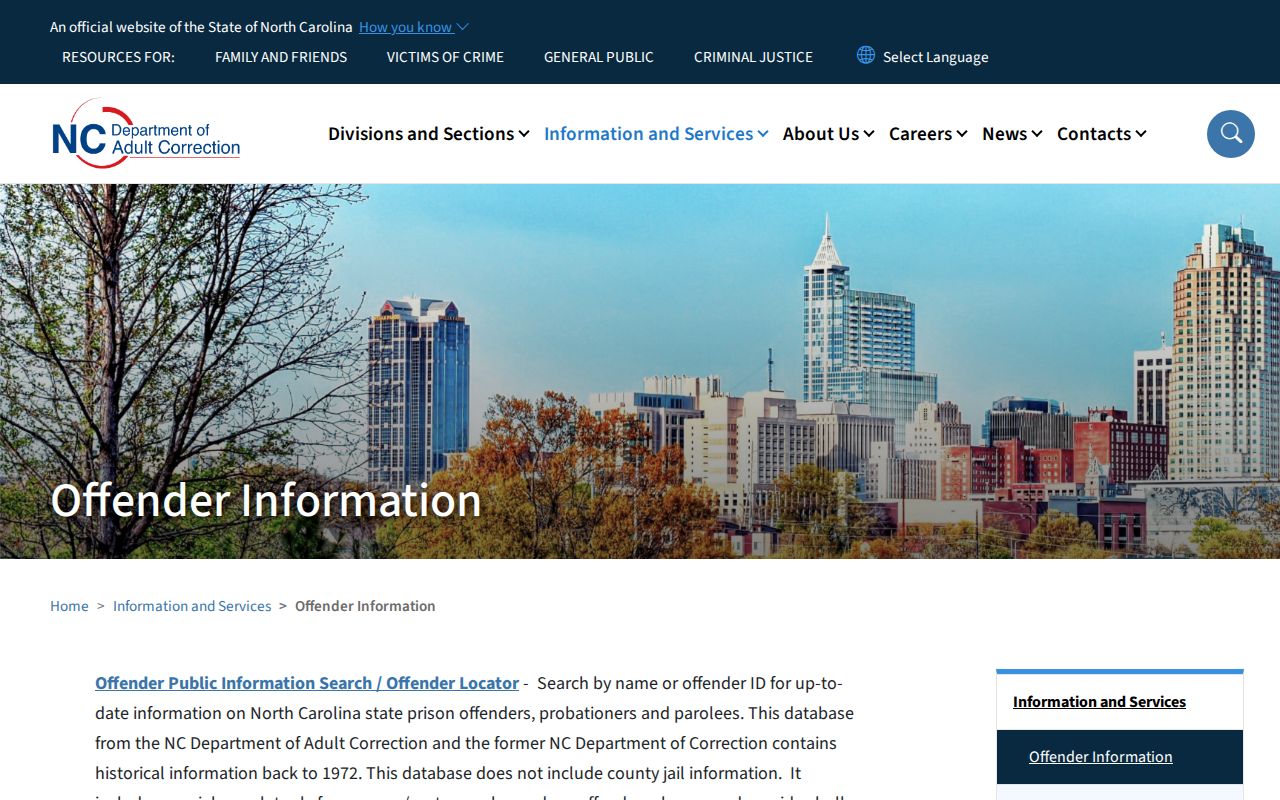
State corrections information is a status lead only. Court disposition and identity still require the appropriate court record and context.
The North Carolina Sex Offender Registry is limited to registered offenders. Its guidance warns that names and dates of birth are not unique and that positive identification requires fingerprint comparison.
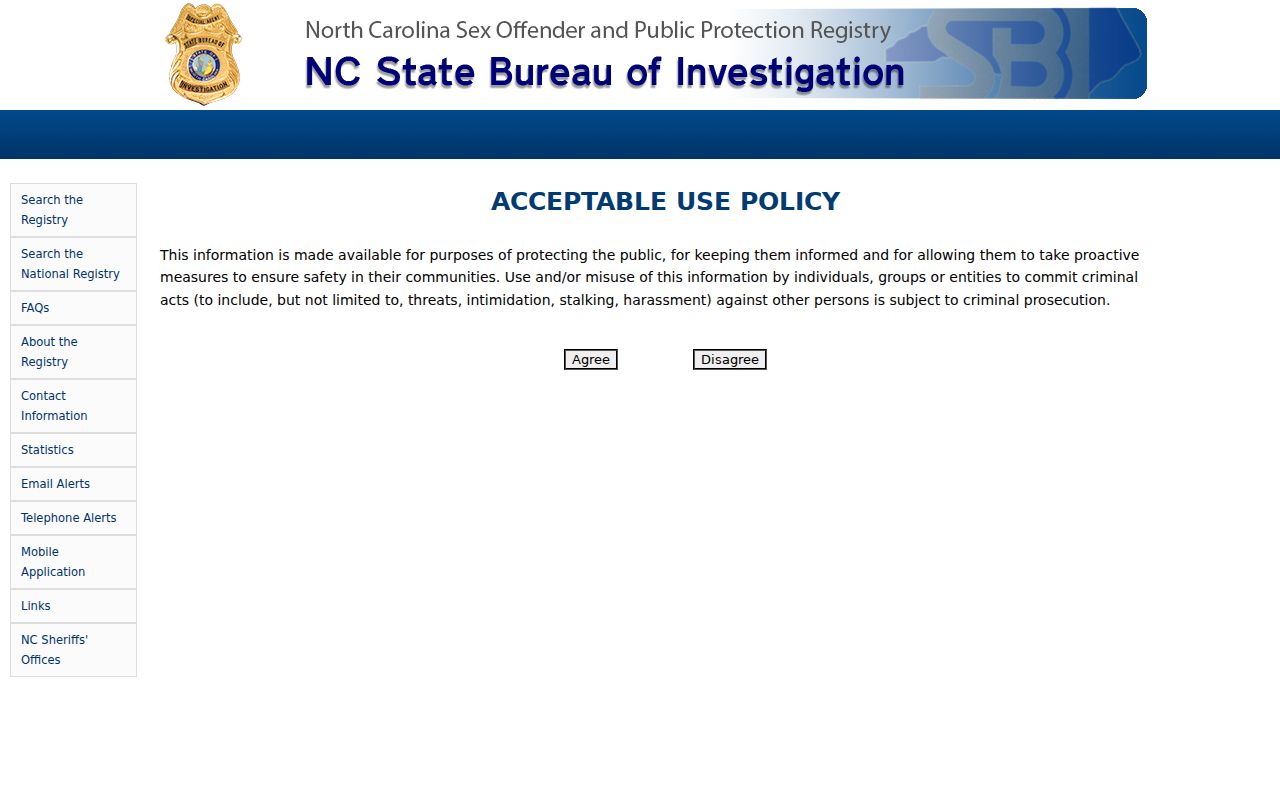
Do not republish or confront someone based on a similar-name registry result. The registry itself warns that threats, intimidation, stalking, or harassment can be prosecuted.
Legal Limits on Fayetteville Resident Lookup
North Carolina’s Public Records Act opens many government records, but record-specific laws still limit access. N.C.G.S. §132-1 defines public records, while other sections and subject-matter statutes protect sensitive identifiers, ACP information, utility billing, some tax material, sealed court records, and other exclusions. Voter law withholds full birth date, Social Security number, registration-agency detail, email, photographs, identification copies, and protected addresses. Signatures may be viewed but not copied or traced.
The NC Address Confidentiality Program gives qualifying participants a substitute address for certain public uses. If a result is missing or uses a substitute address, do not try to reverse it through tax, GIS, directory, or other sources. Correct a wrong record with the custodian that created it: Tax, Elections, Clerk, CCROD, the Secretary of State, or the relevant licensing board. A specific North Carolina Public Records Act request should identify the person, record type, date range, format, and the purpose of the request without asking the agency to create a new compilation.
Lawful use. Use record-search results for lawful personal research, civic transparency, family history, or safety. Do not use a record to stalk, harass, intimidate, or expose a protected address.