
Finding Fayetteville Residents by Record Type
Fayetteville does not have one official list of all residents. Cumberland County Tax Administration connects a listed owner to a parcel. The North Carolina voter lookup can confirm a public registration record. The Register of Deeds connects named parties to recorded instruments, while the library and archives preserve older household evidence. Choose the source by the fact that is known, then keep a short log of spelling, date, address, and result. That makes it easier to separate a strong match from a same-name result.
A parcel listing is not proof that the listed owner lives there. A voter record does not show every person at an address. Deed records show an ownership event, not every occupant. Fayetteville residents directory research works best when two independent records agree and when the date on each record is kept in view.
- Use a street or owner name in Cumberland Tax Administration to identify a parcel and listed owner.
- Check the North Carolina voter lookup for a public registration lead, using name and Cumberland County to narrow a common name.
- Carry the legal owner or legal description into the CCROD grantor-grantee index, then read the recorded image where available.
- For an earlier household, use the Local & State History Room or a DigitalNC directory run before assuming a modern address existed.
- Ask the custodian for a narrow record request when the online result is incomplete, giving the parcel, case, book/page, name, and date span.
Fayetteville Resident Records Custodians
Fayetteville is Cumberland County's seat, but the relevant records are held by several custodians. The Register of Deeds keeps land instruments and local vital-copy channels. Tax Administration maintains parcel listings. Elections holds registration data, and the Clerk is the official custodian for court files. The Fayetteville street directory uses the Tax, GIS, and deed chain in more detail when the question is tied to one address.
Cumberland Register of Deeds
117 Dick Street, Rooms 114 and 117
Fayetteville, NC 28301
910-678-7775
Cumberland Tax Administration
117 Dick Street, Room 530
Fayetteville, NC 28301
910-678-7507
Cumberland County Elections
227 Fountainhead Lane
Fayetteville, NC 28301
910-678-7733
Fayetteville Parcel Searches by Street
Cumberland's prior-year property search accepts four practical starting points: bill number, parcel number, owner name, and street name. A result leads to the value or abstract view. Current calendar-year real-property information follows a separate county route. When a Fayetteville residents directory search begins at an address, the parcel number and listed owner are useful bridges to the GIS map and a later deed search. They are not a finding that the owner is the current occupant.
| Tax search field | How it helps a Fayetteville search |
|---|---|
| Bill Number | Opens a prior-year tax-bill path when the bill identifier is known. |
| Parcel Number | Links the address question to the county's parcel identifier. |
| Owner Name | Tests legal-name variants, including entity or trust names. |
| Street Name | Finds address-keyed property results before a name-indexed deed search. |
| Go to Abstract | Opens the documented value or abstract detail after a result. |
See the county real-estate and GIS instructions before treating the listed owner as a title opinion.
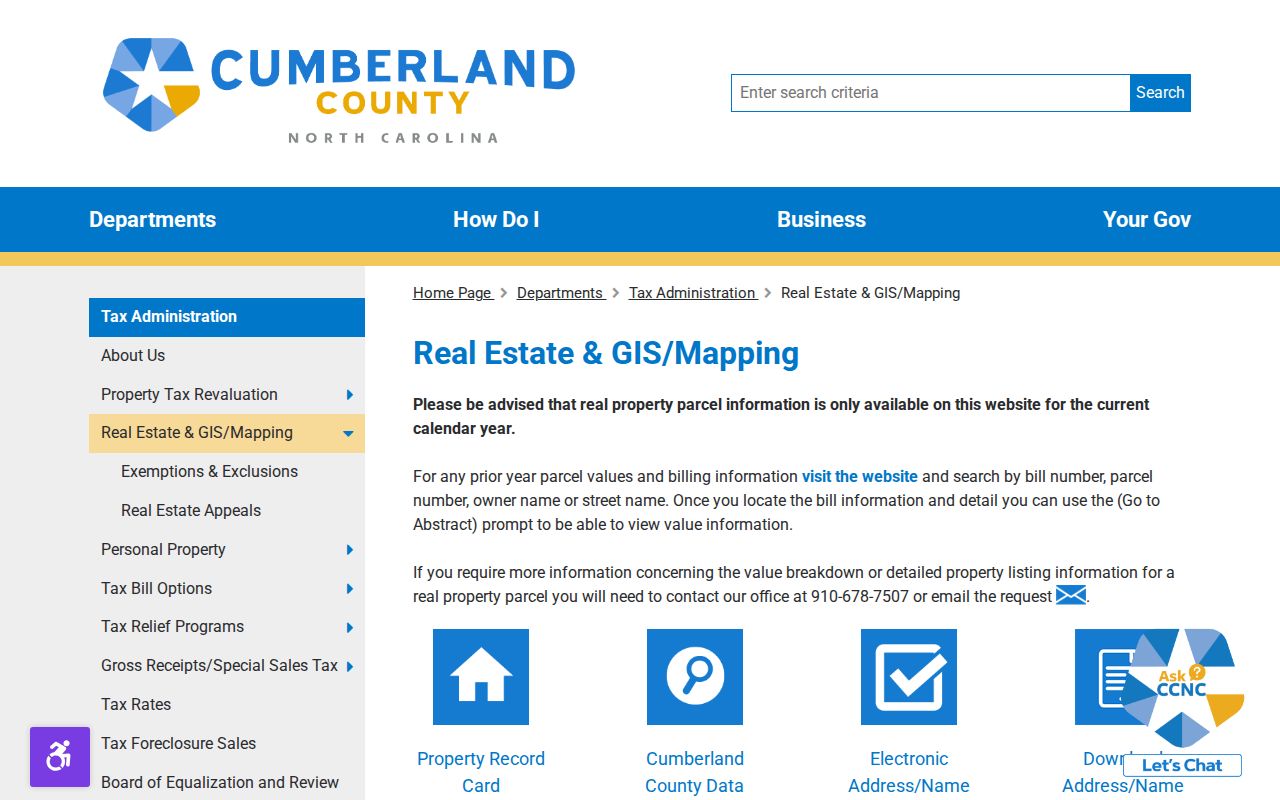
The property-search view is the Fayetteville starting point for an address, then the parcel and recorded-instrument steps add context.
Fayetteville Voter Registration Leads
The State Board's voter lookup is a public registration tool, not a full Fayetteville residents directory. It uses first and last name, with optional middle initial, year of birth, and county filters. A result can show public registration details, status, address, party, districts, polling place, and history. Full date of birth, Social Security number, identification details, email, and protected addresses are confidential under N.C.G.S. §163-82.10.
Use the county filter for Cumberland and select the status that fits the search. A person may be absent because they are not registered locally, the record was removed, an address is protected, or the name was entered differently. The Elections office can address corrections and written data requests; it is the correct fallback when the online form does not answer a narrow records question.
Start at the North Carolina voter lookup and compare any public result with another dated record rather than treating it as a household roster.
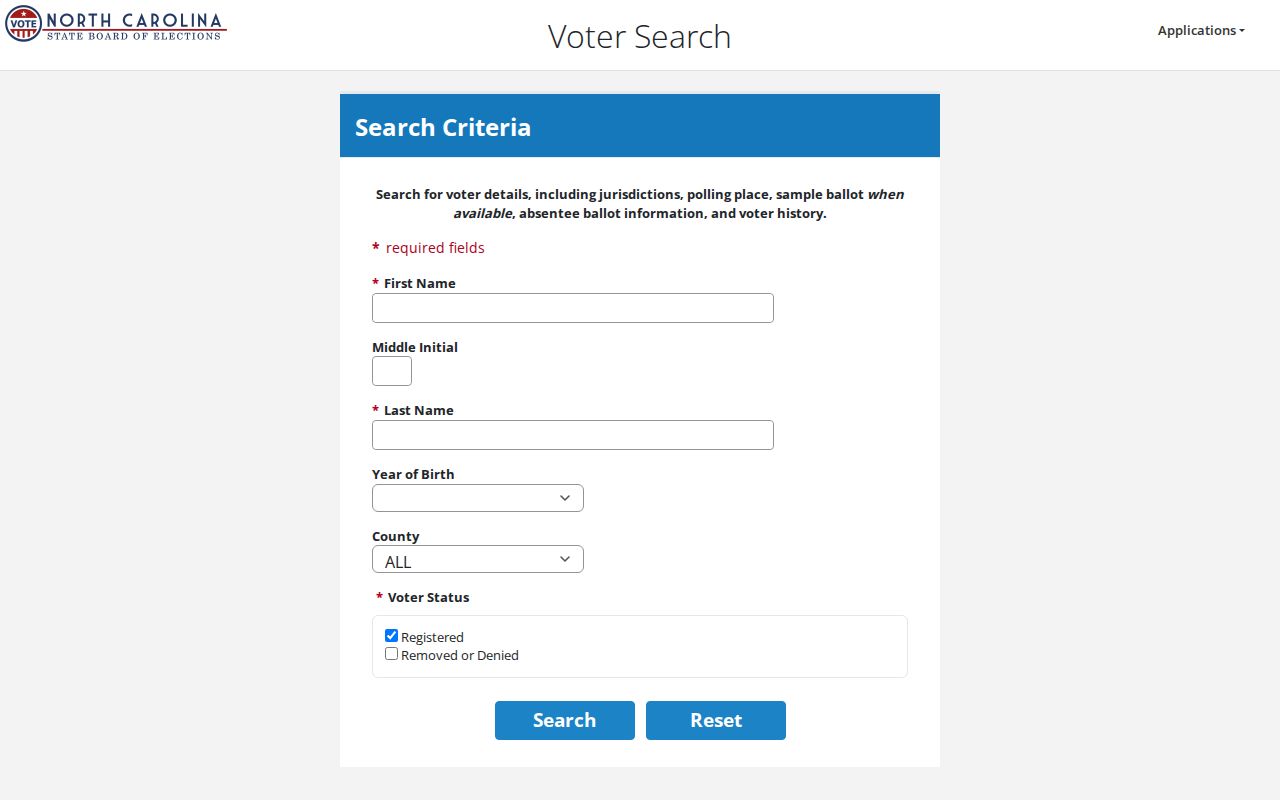
The state form illustrates why a Fayetteville name search should be narrowed with a middle initial, year, or county whenever that information is available.
Current Fayetteville Resident Directory Sources
The current sources below answer different questions. They should be used as separate public records, not combined into an assumed list of everyone in Fayetteville. When the goal changes from a street to one person, a name-first verification sequence helps separate a plausible match from a same-name result.
| Fayetteville source | What it can establish | Custodian | Access path |
|---|---|---|---|
| Tax parcel listing | Listed owner, parcel, and current or prior-year tax context | Cumberland Tax Administration | Web search and office request |
| Voter lookup | Public registration status, address, party, districts, and history | NC State Board of Elections | Individual lookup or written file request |
| CCROD index | Recorded grantors, grantees, instruments, and dates | Cumberland Register of Deeds | Name, book/page, or document search |
| Court Portal | Public docket party and case context | NC Judicial Branch | Portal, Clerk counter, or certified-copy request |
| City public meetings | Named civic participants, appointments, and public actions | Fayetteville City Clerk | Agendas, minutes, and records request |
Commercial people-finder products are a different category. They can combine stale or mismatched material and may charge for access. Original Fayetteville and North Carolina custodians are the better route for verification.
Fayetteville Deed Names and Parcel Clues
The CCROD land index is alphabetic by grantor and grantee, not by street address. First use Tax or GIS to identify the listed owner and legal parcel clue. Then search that name as a grantee for an acquisition instrument, read the prior grantor, and continue backward with book/page or document references. CCROD land records begin in 1754, but its public material does not state one online image or index cutoff.
A grantor is the party transferring an interest. A grantee receives it. The book and page, recording date, and legal description are more reliable chain links than an address string that may have changed. CCROD staff can explain indexing and copies, but they do not conduct title searches. For an uncertified deed, the stated fee is $0.25 per page; a certified copy starts at $5 for the first page and $2 for each additional page.
Open the CCROD land-record FAQ before requesting an image or visiting the counter.
Fayetteville Court Docket Search Limits
North Carolina's eCourts Portal has party name, business name, record or case number, citation number, attorney name or bar number, cross-reference number, nickname, county, and court-date search modes. Public users can view eligible case information and some available documents. The Portal is a docket-access layer, not the official court record. A sealed, juvenile, or expunged matter is not a gap to work around.
Cumberland's Clerk of Superior Court is the official file custodian at 117 Dick Street and can provide the appropriate copy route. Ask with the case number, parties, filing date, and document name. Cumberland received public eCourts kiosks with scanners, printers, and payment services in June 2025, and statewide Odyssey implementation reached all counties in October 2025.
Use the NC eCourts service hub for the public portal and court service information.
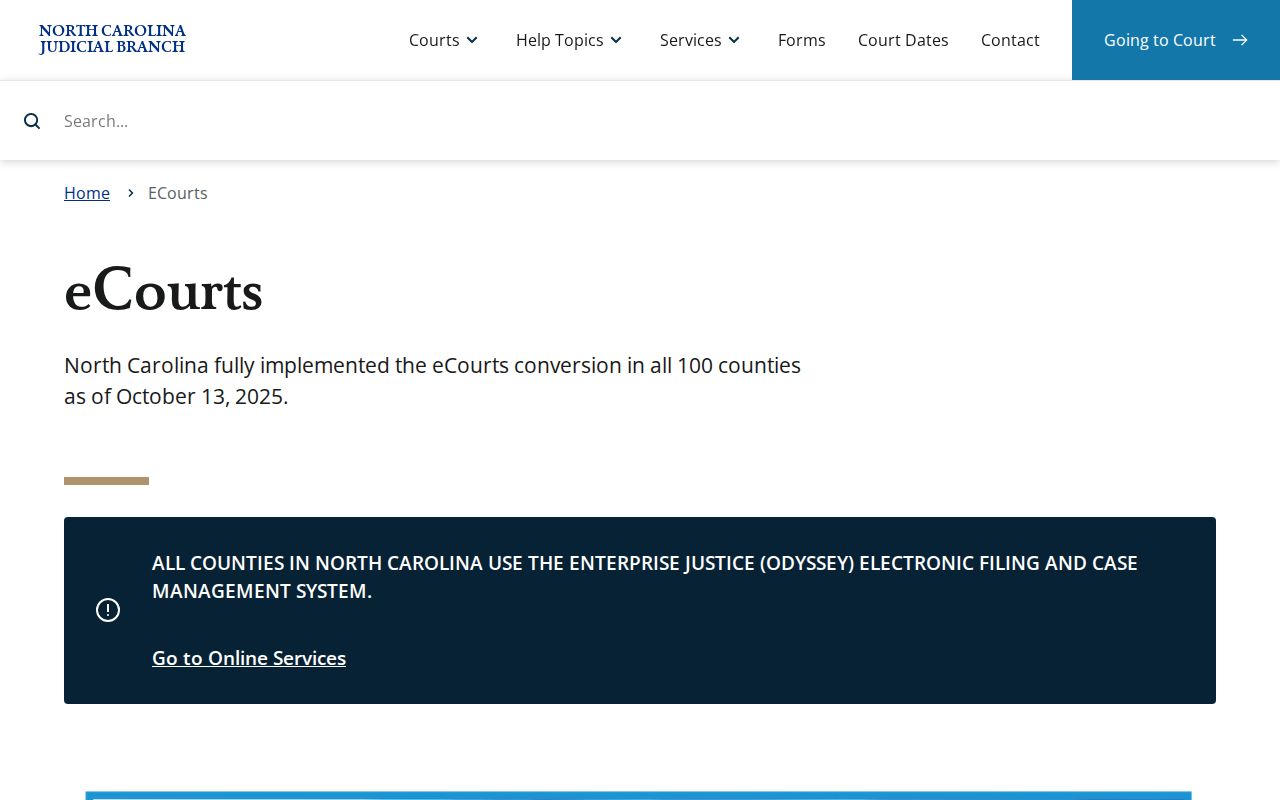
The eCourts hub is useful for a current public docket check, while certified material remains a Clerk request.
The Cumberland County court page provides the local court and Clerk contact route.
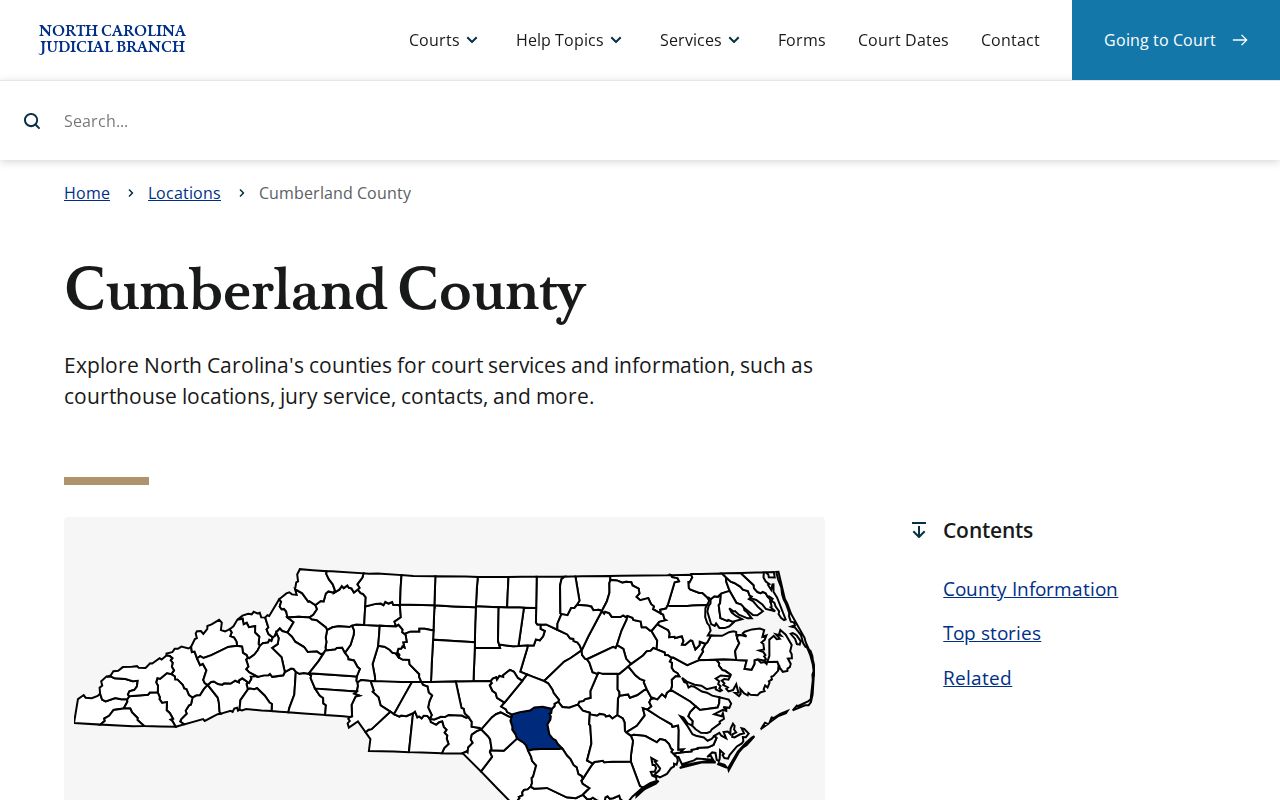
The county court listing directs a Fayetteville searcher to the local Clerk when the Portal cannot supply an official copy.
Historical Fayetteville Resident Directories
Fayetteville's historical shelf reaches at least to Bernard's 1866-67 directory and includes Hill, Gardiner, and American Legion volumes. DigitalNC offers scans for 1909-10, 1915-16, 1924, 1928, and a later 1968 record. The Cumberland County Public Library Local & State History Room keeps city directories alongside yearbooks, maps, newspapers, census material, vital indexes, and photographs. The full collection and reading method are on the Fayetteville city directory page.
Older directories are annual snapshots. A householder section can connect a street number to a printed name, but absence may reflect a publication gap, adult-only coverage, a changed number, or a name variant. The library will try to answer a specific historical question and retrieve books or microfilm, but a death date is needed for an obituary lookup because its newspaper holdings are not indexed by name alone.
Fayetteville Vital Record Access Rules
Birth, death, marriage, and divorce evidence has a different access path from a directory or deed. Cumberland Register of Deeds can provide local birth, death, and marriage copies, while NC Vital Records handles statewide certificate orders and divorce certificates. State system coverage listed in the research includes births from 1913, deaths from 1930, marriages from 1962, and divorces from 1958. A certified copy requires the relationship, legal-interest, identification, and statutory conditions in N.C.G.S. §§130A-93 and 130A-99.
The local form supports in-person and mail requests. Cumberland states a $10 fee for certified copies and $0.25 for uncertified copies. NC Vital Records lists a $24 regular search fee, which remains nonrefundable when no record is found. Older routes include State Archives categories and permitted FamilySearch collections, but no generic historical opening period was verified for vital records.
The NC Vital Records order page explains the current state order choices, delivery routes, and eligibility questions.
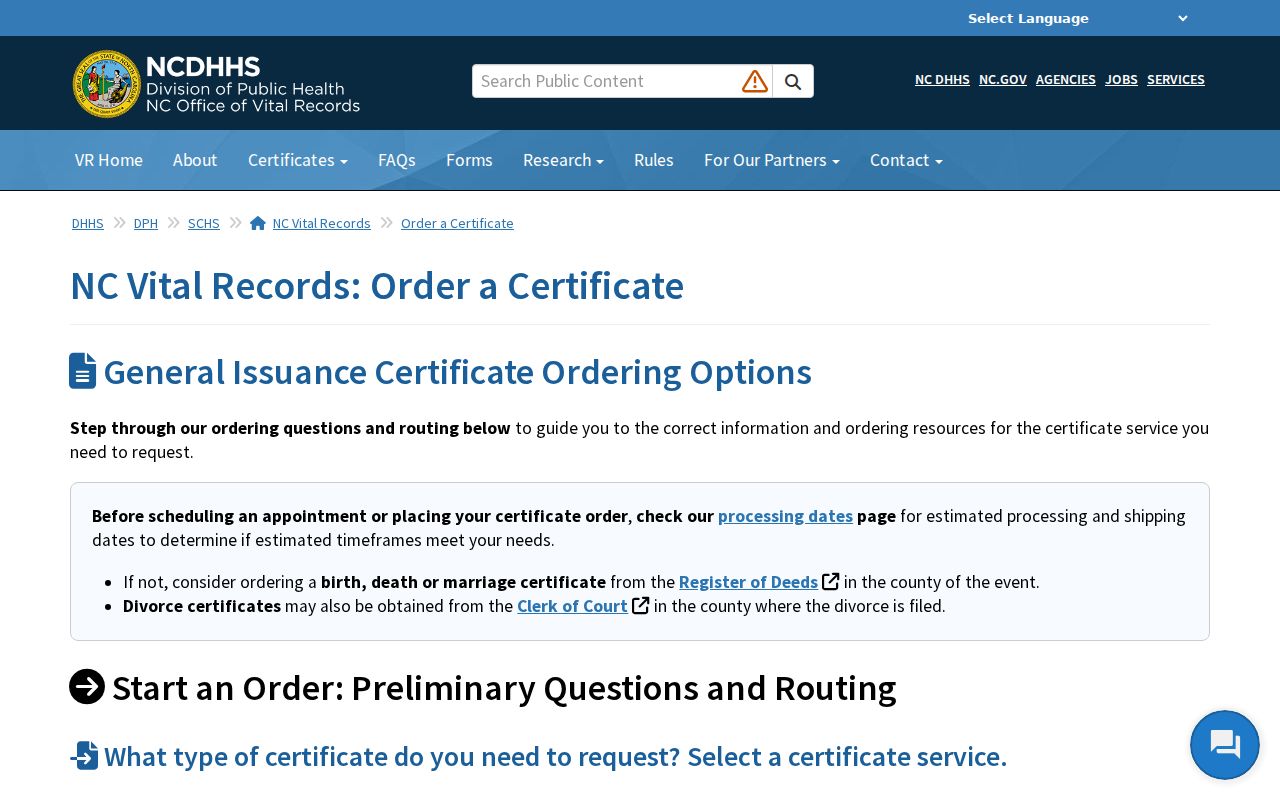
The state order screen shows why a vital-record request needs the correct certificate type and relationship information before it is submitted.
Fayetteville Public Record Request Paths
North Carolina's Public Records Act, Chapter 132, allows inspection and copying of many public records at reasonable times, with prompt production when practicable. It does not require an office to create a new compilation. A useful request names the custodian, exact record type, person or parcel, date range, format, and whether inspection or a certified copy is needed. Agencies may charge actual reproduction costs and a reasonable special-service charge for extensive work under §132-6.2.
Use the City of Fayetteville portal for city-held material such as public meeting, permit, or code records. County deeds and local vital copies go to CCROD, court files go to the Clerk, and election data goes to the elections custodian. The city notes that a request exceeding four staff or IT hours can incur a fee. Keeping the request narrow is the best way to receive a meaningful answer.
Submit city material through the Fayetteville public-record request portal.
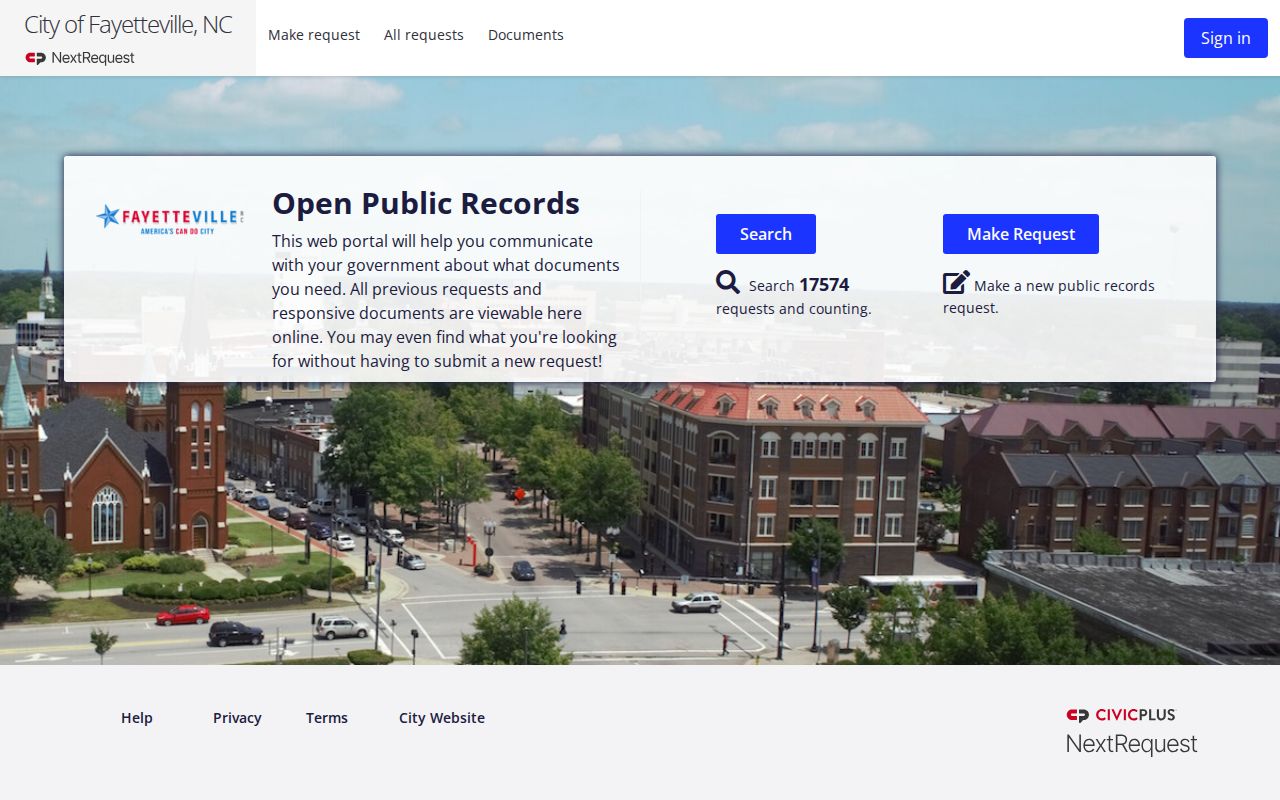
The city portal is a records-request route for material it holds, not a replacement for county deed, court, or election custodians.
Fayetteville Privacy and Protected Addresses
Public access has limits. North Carolina protects categories such as Address Confidentiality Program information, certain utility and tax details, full voter birth dates and identity fields, restricted vital information, and sealed court material. An affected person can request redaction of specified sensitive identifiers from an online register or clerk image under N.C.G.S. §132-1.10. A missing record can reflect a privacy rule, a name variation, or the fact that the source never covered that person.
- Parcel
- A county map and tax identifier for a piece of land, not a household list.
- Index
- A finding aid that points to a record, rather than the full record itself.
- Criss-cross directory
- A printed street or householder section that works from address to listed occupant.
- Roll
- A list kept for a defined purpose, such as registration or tax administration.
Fayetteville Records From Paper to Portal
Fayetteville research spans several record eras. Cumberland land records begin in 1754. The city suffered a major fire in 1831 and wartime destruction in 1865, so an old structure or address needs more than one source. Sanborn maps are documented for 1885, 1891, 1896, 1908, 1914, 1923, 1930, and 1958. The 1959 Hill's directory used four separate systems: Yellow Pages, an alphabetical list, a Householders street guide, and a numerical telephone directory.
The county's 2008 addressing work scanned plans and replaced 21 four-drawer file cabinets while building a 911 web-map process. Later GIS layers, permit portals, and eCourts added online routes without erasing the counter and archive routes. Preserve old street spellings, intersections, parcel clues, and dates alongside the modern address. That is especially important after the 2025 I-295-related road changes.
Fayetteville Unclaimed Property Leads
The North Carolina Treasurer's unclaimed-property route can be a useful name lead, but it does not confirm a current Fayetteville address or identity. Search by name through the official NCCash link, then follow the Treasurer's claim and proof process. Do not respond to an unsolicited payment request or pay a private intermediary to begin a claim. The same care applies to deed-copy solicitations and court-payment messages.
Cumberland's free Property Notification enrollment can alert a name match for deeds, deeds of trust, and mortgages with a filing date, book/page, and document link. The county says that service is not guaranteed fraud prevention. A questionable instrument should be checked with CCROD and, when appropriate, legal counsel.
Begin at the NC Treasurer unclaimed-property page rather than a message or advertisement.
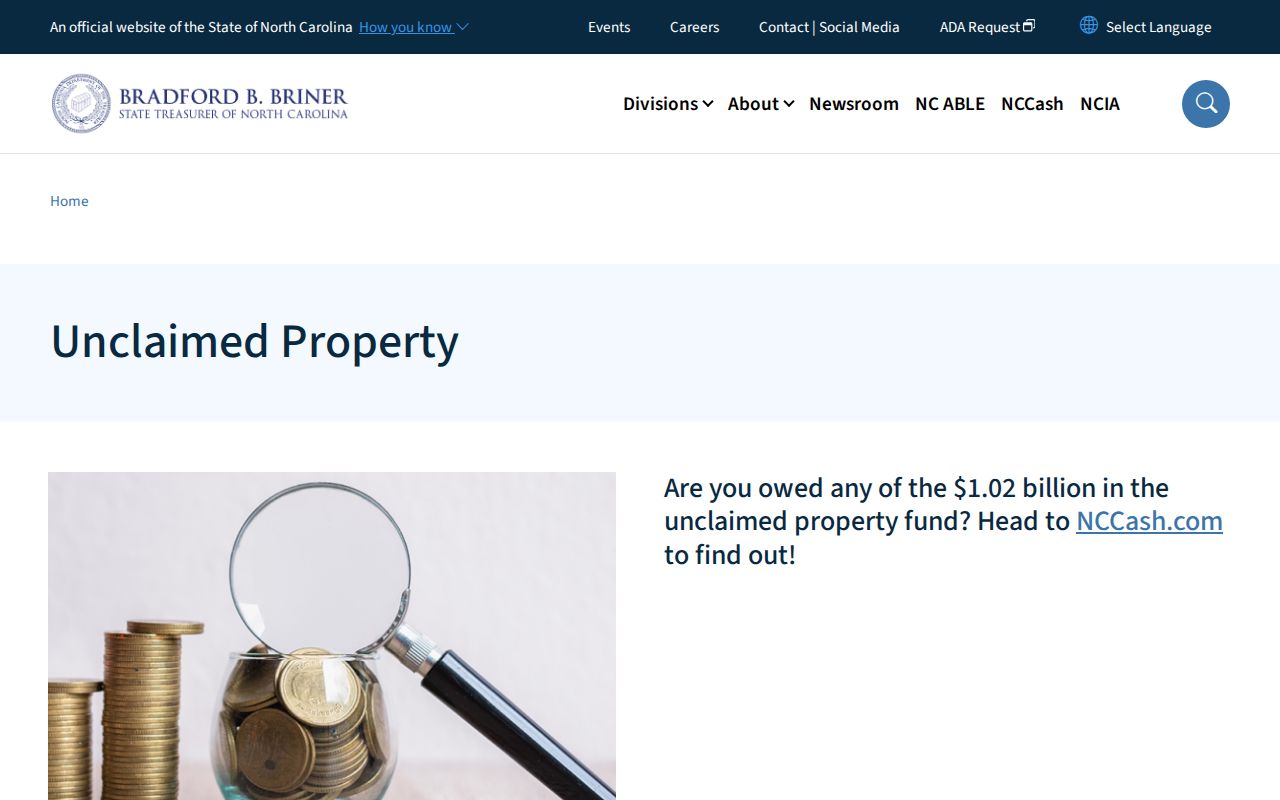
The state unclaimed-property page is an official starting point for a claim, while identity and ownership proof are reviewed through the Treasurer's process.